Poland’s scientific membership of the Institut Laue-Langevin began in 2004, shortly before the enlargement of the European Union. What followed was a long process of building the institutional and financial framework required to establish and maintain Poland’s participation in the ILL.
From the first initiative and the Kraków meeting to successive transitional arrangements and the regular five-year membership cycle, the story is one of persistence, cooperation and continuity.
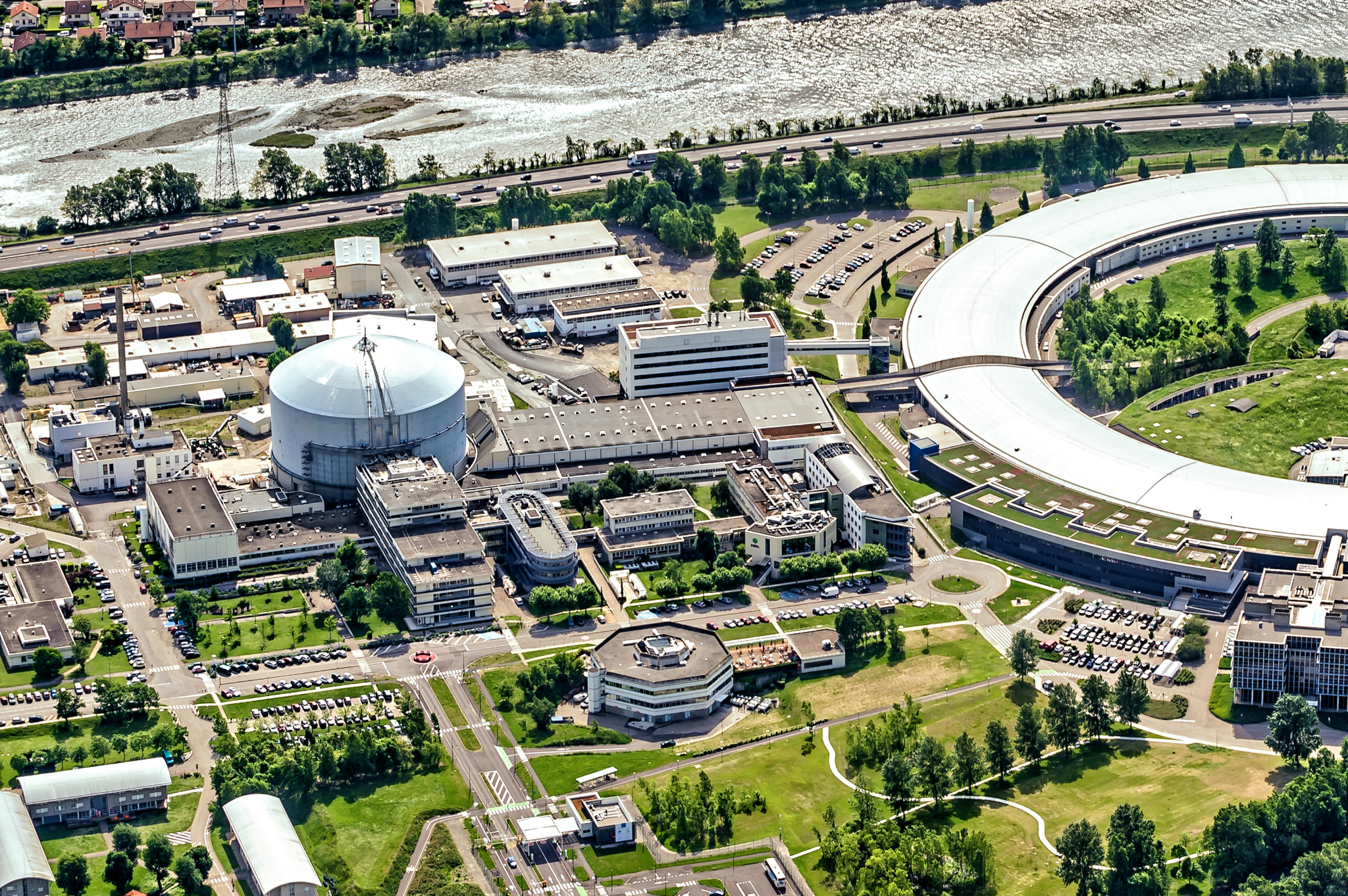
ILL, Grenoble · Serge Claisse
The Inception
2004–2005
The beginning of Poland’s scientific membership of the Institut Laue-Langevin.
2004
The history began in April 2004, when Colin Carlile, then Director of the ILL, decided to put into practice his long-standing vision of extending ILL scientific partnerships to the countries of Central and Eastern Europe.
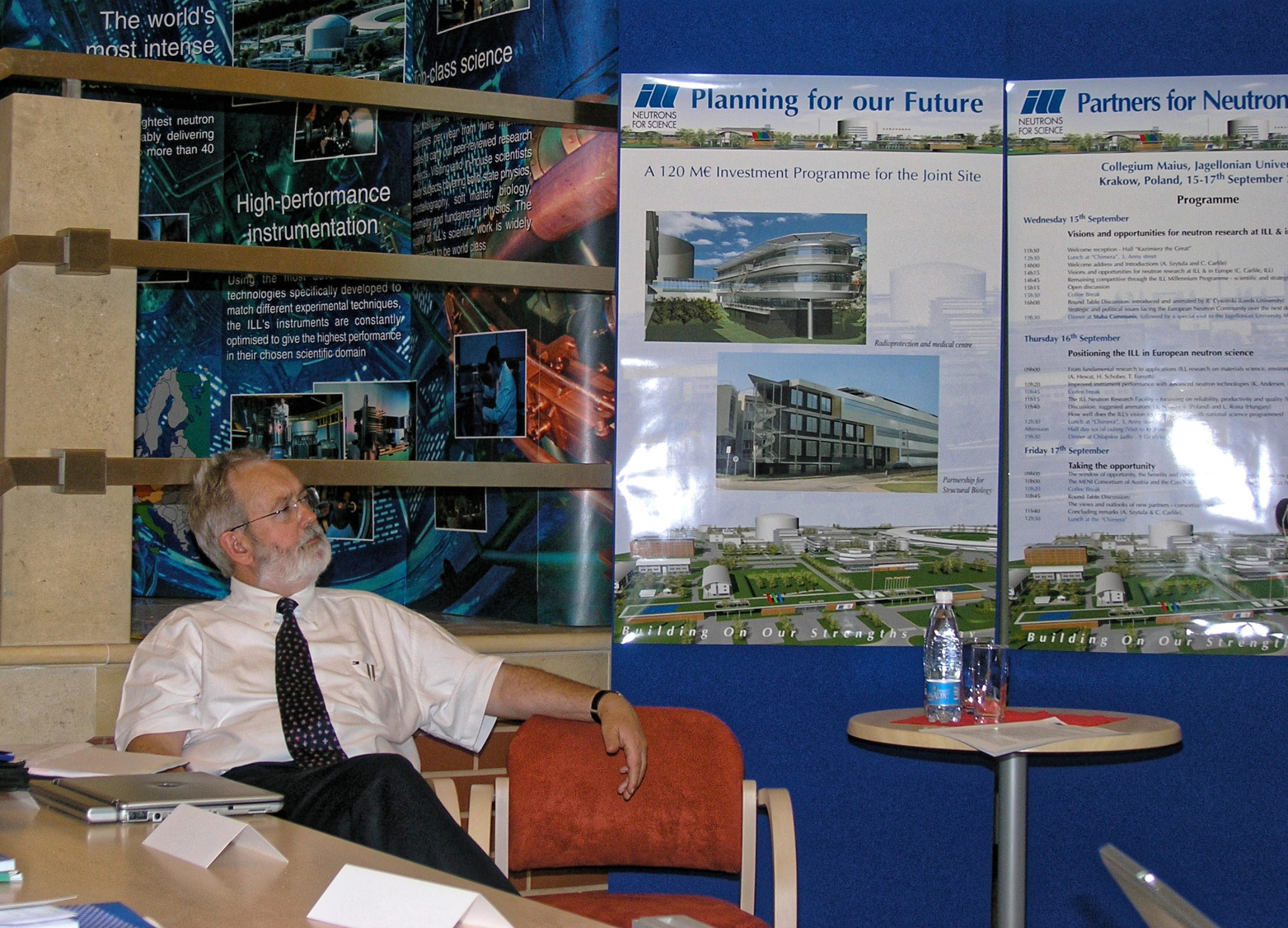
Following his initiative, the ILL and the Jagiellonian University jointly organised a scientific information meeting in Kraków. The meeting took place at Collegium Maius from 15 to 17 September 2004 and brought together representatives of the scientific communities of the new EU Member States.
An immediate outcome of the Kraków meeting was the launch of coordinated efforts to secure funding for Poland’s scientific membership of the ILL. Professor Marek Jeżabek, Director of IFJ PAN, assumed responsibility for coordinating these activities, with IFJ PAN acting as the lead institution for the emerging national initiative.
Kraków Meeting · 15–17 September 2004
Perspectives for Neutron Science and Partnership at the Institut Laue-Langevin
The ILL and the Jagiellonian University jointly organised the meeting at Collegium Maius. It presented the ILL’s research facilities and the opportunities available to scientists from the new EU Member States.
Colin Carlile, Director of ILL and initiator of the Kraków Meeting
2005
The First Obstacle
Funding and the legal framework
Throughout 2005, efforts focused on securing financial support and establishing an appropriate legal framework for Poland’s scientific membership of the ILL. On 5 October 2005, the Ministry informed the applicants that the project did not satisfy the formal requirements for funding under the Special Research Programme.
The necessary efforts to develop an appropriate funding mechanism were undertaken immediately and soon proved successful.
The Years That Followed
2006–2028
From interim membership and successive transitional arrangements to a regular five-year cycle.
2006
INTERIM ILL MEMBERSHIP
BUILDING THE CONSORTIUM
On 26 April 2006, the Agreement establishing the ILLPL Consortium, coordinated by IFJ PAN, was signed. On 15 September 2006, the Memorandum of Intent concerning Poland’s Interim Scientific Membership was signed. The arrangement covered 1 October 2006 to 1 October 2008.
2008
AN UPHILL STRUGGLE
CONTINUATION
Preparations began to continue Poland’s scientific membership beyond the initial two-year period. Membership through BELSWENI was identified as the most advantageous solution under the then-existing contribution system.
2009
Consequences
FUNDING WITHDRAWN
Scientific Membership of the ILL suspended
95 days of beamtime allocated to Polish researchers lost
Participation of the ILL in scientific events in Poland cancelled
2010
Membership resumed
FUNDING RESTORED
On 7 May 2010, funding for Poland’s scientific membership was approved, enabling Poland to resume its participation in BELSWENI and regain scientific membership of the ILL. A four-party agreement subsequently established BELPOLSWENI.
2013
TRANSITION TO A NEW ARRANGEMENT
The ILL Directorate proposed a dedicated bilateral Agreement on Transitional Scientific Membership of the ILL for 2014 and 2015, signed on 17 December 2013. It ensured uninterrupted membership from 1 January 2014 until 30 June 2015.
2015
LEGISLATIVE OBSTACLE
New Polish legislation fundamentally altered the mechanism for financing contributions to international research organisations. The new framework required formal international agreements; resolving the legal issue and implementing the necessary amendments took approximately one year.
2016
A SIMPLE BILATERAL ARRANGEMENT
A bilateral arrangement between the ILL and Poland was proposed in place of lengthy four-party negotiations within TRANSNI. The Agreement on Transitional Scientific Membership of the ILL until 31 December 2018 was signed in September 2016 and kept Poland’s membership in phase with the ILL contractual periods.
2018
APPLICATION
LAST TRANSITIONAL YEAR
In autumn 2018, NDPN submitted its application for the next five-year contractual period, 2019–2023. The final application was submitted on 12 December 2018, followed by a favourable funding decision on 21 December.
2019
AGREEMENT ON SCIENTIFIC MEMBERSHIP
A new five-year Scientific Membership Agreement was signed on 21 January 2019, ensuring Poland’s scientific membership throughout the 2019–2023 contractual period.
2023
APPLICATION
In June 2023, preparations began for extending Poland’s scientific membership for a further five years. The application was submitted on 24 August 2023 and received a positive scientific evaluation and ministerial approval.
2024
AGREEMENT
On 24 January 2024, the new Scientific Membership Agreement was formally signed, securing Poland’s scientific membership of the ILL until the end of 2028.
2024–2028
Scientific Membership continues.
A partnership initiated two decades earlier continues.